Geis: the Celtic curse rules hiding behind Erinn
✍️ Alice・愛麗沙
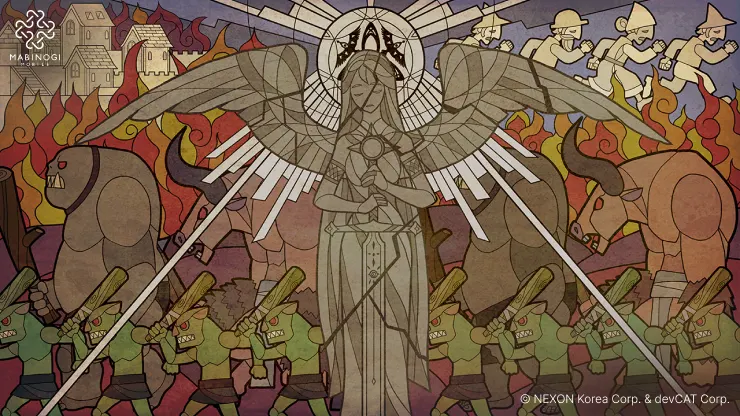
Korea’s Jujutsu Kaisen collaboration starts on 5 November, and a game about Celtic myth is about to fill up with an anime about curses. It’s a better fit than it looks. The Irish and Welsh stories Mabinogi borrows from are full of curses, and they work on a rule that Jujutsu Kaisen fans already know and most Mabinogi players have never noticed: a curse is a condition, and the condition is the whole story.
In Irish myth a curse is usually a geis: a personal rule (“never eat dog meat”, “never refuse a feast”) that you live by and that kills you the day two rules collide. Cú Chulainn, Conaire Mór, Fergus and Diarmuid all die or lose everything that way. The Welsh version, in the Mabinogi itself, is Arianrhod’s three curses on her son, and each one is beaten by a trick that meets the letter of the curse. The pattern is condition → bargain → loophole, not “evil magic”. Jujutsu Kaisen’s binding vows are the same idea turned into a power system. Mabinogi Mobile’s gear curses also follow it, more than you’d think: you’re cursed by failing a gamble you chose to take (engraving, enhancement, alchemy), and the way out is a price, not a fight. That reading has a practical edge: the blacksmith’s fixed price beats a lucky potion on top-tier gear.
The rule: what a geis is
A geis (plural geasa, roughly “gesh” and “gyasa”) is a taboo or obligation laid on one person, often at birth or at a turning point, sometimes by a druid, sometimes by a lover, sometimes by the hero himself. Some are prohibitions: don’t do this. Some are injunctions: always do that. Keeping them is bound up with the person’s honour and luck. Breaking one isn’t a sin in the Christian sense. It’s a crack, and doom comes through it.
The important thing is that geasa are specific and literal. “Never eat the flesh of a dog.” “Never refuse hospitality.” “Never let three red men ride before you to a red house.” The stories aren’t about whether the hero is good. They’re about the day the world arranges itself so that keeping one rule means breaking another.
The mechanism: how a geis kills
Cú Chulainn took his name, “Culann’s Hound”, from killing the smith Culann’s guard dog as a boy and offering to serve as its replacement. From then on he was under a geis never to eat dog meat. He was also bound not to refuse food offered to him. On the road to his last battle he meets three crones cooking a dog on spits, and they offer him a share. Refuse, and he breaks one geis; eat, and he breaks the other. He takes it with his left hand and the strength leaves that side of his body. He dies that day, tied upright to a standing stone so he can face his enemies on his feet, and only when a crow lands on his shoulder do they dare approach. The crow is the battle-goddess’s bird (our Morrighan piece covers who that is).
Conaire Mór, a high king, is given a list of geasa when he takes the throne. In The Destruction of Da Derga’s Hostel he breaks them one at a time, each time for a reasonable-sounding reason, and the story counts them off like a clock. By the time he reaches the hostel he has broken almost all of them, and the hostel burns.
Fergus mac Róich is under a geis never to refuse a feast. He’s escorting the sons of Uisnech home under his protection when a man invites him to dinner. He can’t say no, so the brothers go on without him and are killed. Diarmuid Ua Duibhne is put under a geis by Gráinne to run away with her from her betrothed, Fionn; years later he dies hunting the boar of Benn Gulbain, with Fionn letting the healing water run out through his hands.
And there’s Macha’s curse. Forced to race the king’s horses while pregnant, she wins, gives birth at the finish line and curses the men of Ulster to suffer a woman’s labour pains in their hour of greatest need. That curse is why, when Ulster is invaded in the Táin, a teenage Cú Chulainn holds the border alone: everyone else is lying down.
Every one of these has the same parts: a condition, a moment when conditions collide, and a cost paid in full.

The Welsh version: three curses and three loopholes
The game is named after the Welsh Mabinogi, and its Fourth Branch has the cleanest curse story in the canon. Arianrhod, shamed by the birth of a son she denies, lays three destinies (tynghedau) on him:
- He will never have a name unless she gives it.
- He will never bear arms unless she arms him.
- He will never have a wife of any race now on earth.
The magician Gwydion beats all three by working to the letter. Disguised as shoemakers, he and the boy make Arianrhod watch the child hit a wren with one throw, and she exclaims that the fair-haired one has a skilful hand: Lleu Llaw Gyffes, and she has named him. Disguised as bards, they fake an attack on her castle so she arms the boy herself. For the third, Math and Gwydion make him a wife out of flowers, oak, broom and meadowsweet. Blodeuwedd is of no race on earth, and the curse never saw her coming. (It ends badly for everyone, which is also Welsh.)
The Third Branch adds revenge-by-curse: an enchanter, Llwyd son of Cil Coed, empties the whole land of Dyfed of people and houses to avenge a humiliating trick played on his friend Gwawl in the First Branch, the “badger in the bag” game. It’s lifted not by a hero’s blade but by Manawydan catching a mouse and refusing every ransom until the enchanter undoes everything. Again: a bargain, not a battle.
The confusion: “a curse is just dark magic”
That’s the modern fantasy default, and it’s exactly what neither the myths nor Jujutsu Kaisen mean. Jujutsu Kaisen’s binding vows are geasa with the doom reversed: a sorcerer accepts a condition (reveal your technique, restrict yourself) and gains power for it, and breaking a vow brings a penalty. Cú Chulainn would have understood that perfectly. The modern series makes explicit what the Irish stories imply: the condition is where the power comes from, which is why the heroes in the old stories are both the strongest people in them and the ones with the most rules.
Where curses live in Mabinogi Mobile
Mobile doesn’t have geasa, but its gear curses obey the same grammar: condition → cost, never a fight.
How you get cursed. Korea’s official guides list four ways, and every one is a gamble you opted into: failing a rune engraving (the failure chance on that screen is literally the chance of being cursed), failing an engraving enhancement, an unlucky roll on performance improvement, and a failed alchemy. A cursed item loses stats and can’t be dismantled, repaired, used as alchemy material or converted.
How you get out. Four prices:
| Way out | Price | Odds |
|---|---|---|
| Curse Removal Potion | 1 potion, 2 on top-tier gear since 25 June 2026 | certain |
| Blacksmith NPC | holy water and Spirit Traces | certain since 26 March 2026, several items at once |
| Succeed at engraving enhancement | the enhancement’s materials | the enhancement’s own odds |
| Sit at a campfire (since 15 October 2026) | time | unpublished chance, one equipped item per success |
The arithmetic that matters. We counted 37 guaranteed Curse Removal Potions on Korea’s server across October and November (the full count). At two per top-tier item, that’s only 18 top-tier uncurses. If you’re engraving top-tier gear this season and failing often, the blacksmith is the cheaper route: holy water and Spirit Traces come from routine sources, potions don’t. Save potions for the moment you need a specific item back right now, before a raid, and let the blacksmith clear the backlog.
Curses as names. Korea’s content uses the word for flavour, too: the Cursed Stormclaw in the Runda Abyss’s  Cave of Madness, the Summoned Wraith Shaman’s “Evil Spirit’s Curse” debuff in the
 Cloud Wasteland, and a side-quest chain that runs from a school ghost story to “The Cursed Lute” and on to an archmage’s legacy (our translations of the Korean names). None of them is a geis. If Erinn ever writes one, a Mabinogi with this much Irish myth in it is overdue.
Where Taiwan and Japan stand
- Taiwan gets the same Jujutsu Kaisen collaboration one day earlier, on 4 November. Its gear curses come from the same four gambles; check your own server’s notices for whether the campfire uncurse (Korea, 15 October) and the two-potion rule for top-tier gear have arrived yet, since both are Korean changes from 2026.
- Japan gets a different collaboration (Oshi no Ko, from 4 November), and on its launch-era build top-tier gear isn’t a concern yet. The lore applies everywhere: Japan’s server is the one where most players are meeting Erinn’s Celtic roots for the first time.
What to do now
- Before you engrave or enhance top-tier gear: count holy water and Spirit Traces, not just potions. The blacksmith is your bulk route.
- Keep a small potion reserve for emergencies, about two per top-tier slot you’re actively working on.
- During the collaboration: enjoy the curse theme, and don’t expect it to change how curses work. Korea hasn’t announced any gameplay link, and a collaboration usually brings costumes and events, not system changes.
- If you want the original stories: the Mabinogi’s Fourth Branch, the Death of Cú Chulainn and Da Derga’s Hostel are short and all in public-domain translations.
What would change this page: a collaboration notice that ties Jujutsu Kaisen events to curse mechanics, or a Korean change to curse removal (the campfire’s odds being published would be the first). The myth won’t change.
Inline icon sources: Image source: m.blog.naver.com (community capture of Nexon's Mabinogi Mobile) · Image source: youtube.com (community capture of Nexon's Mabinogi Mobile)